
Short answer
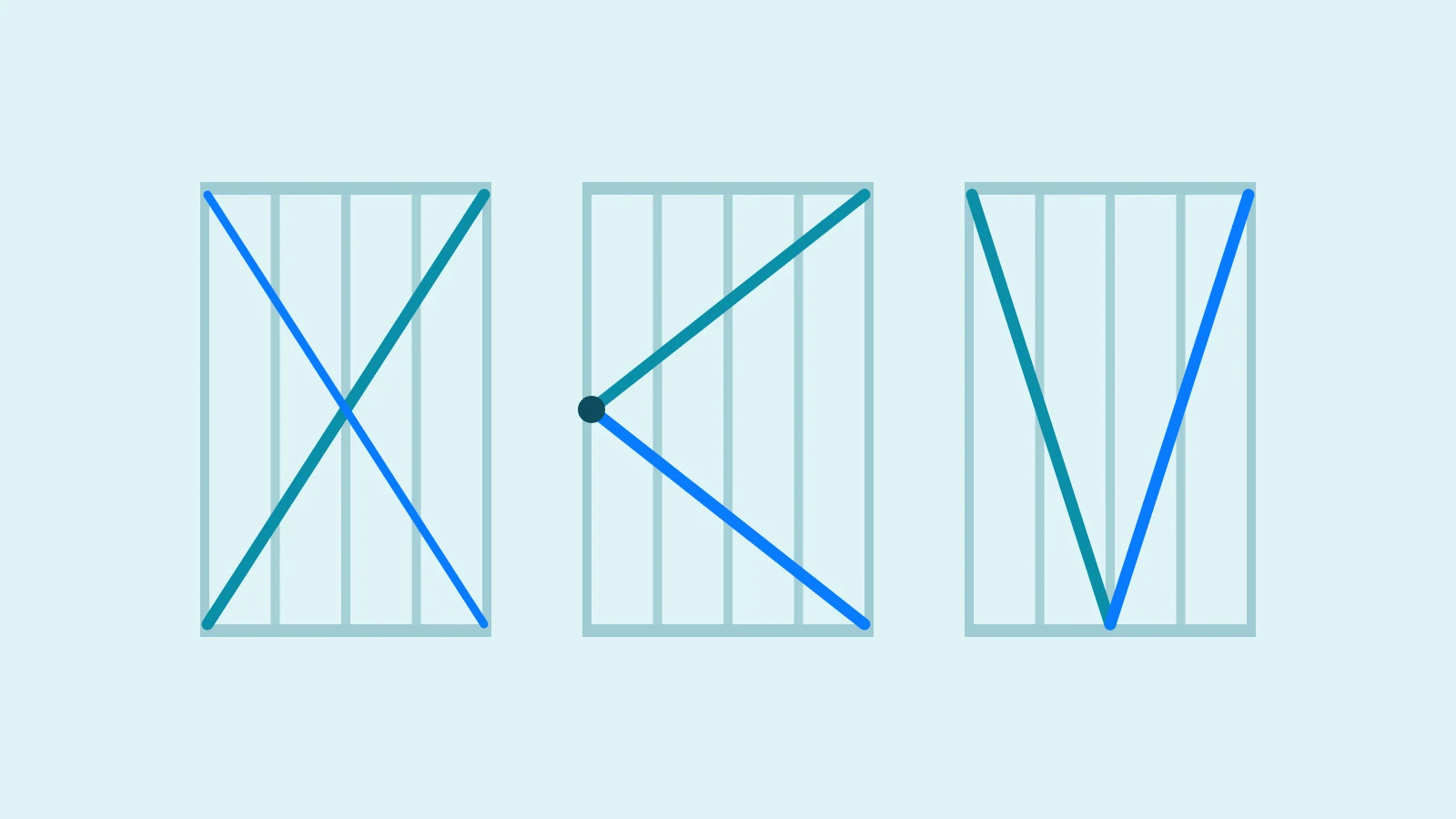
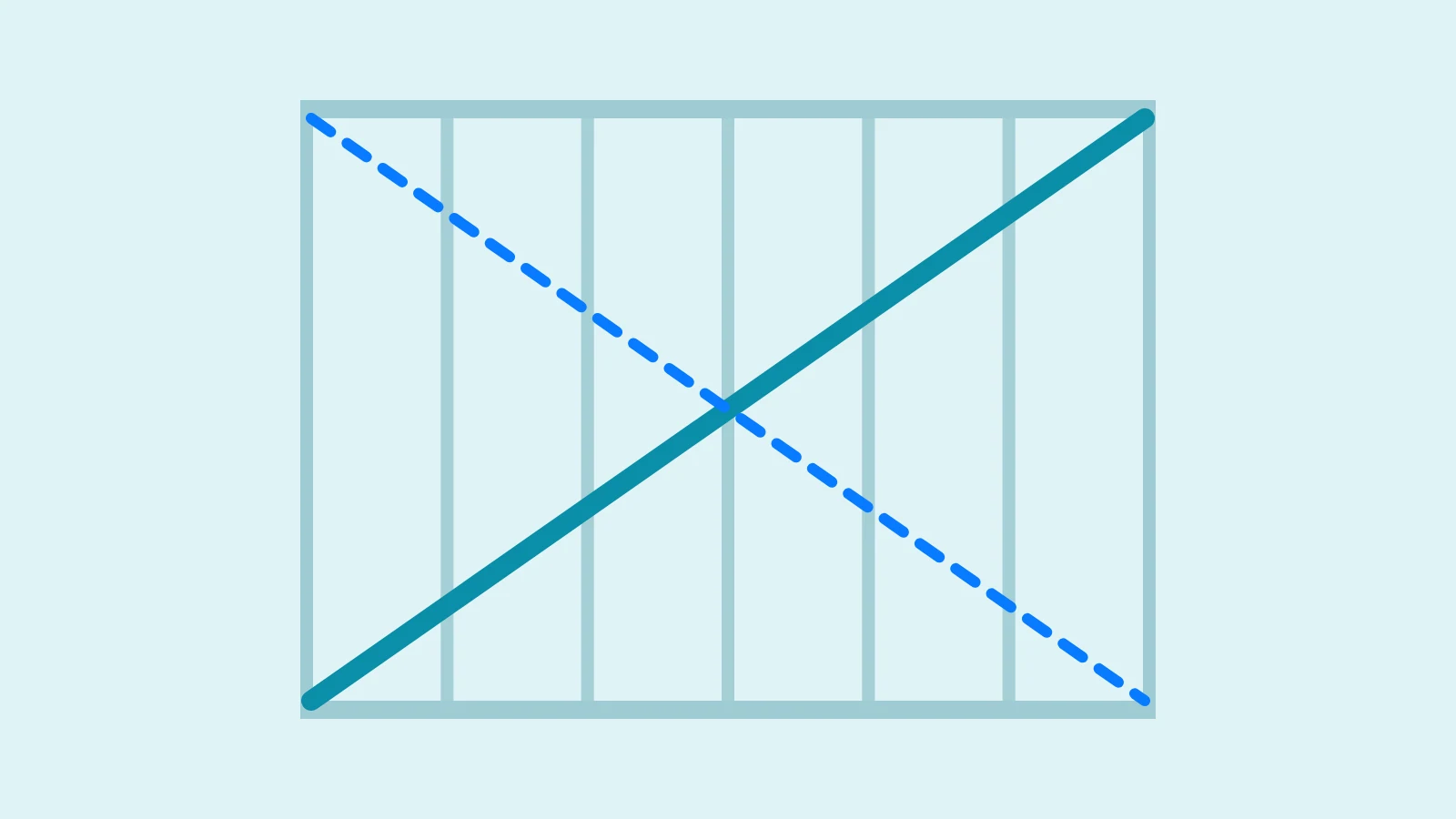
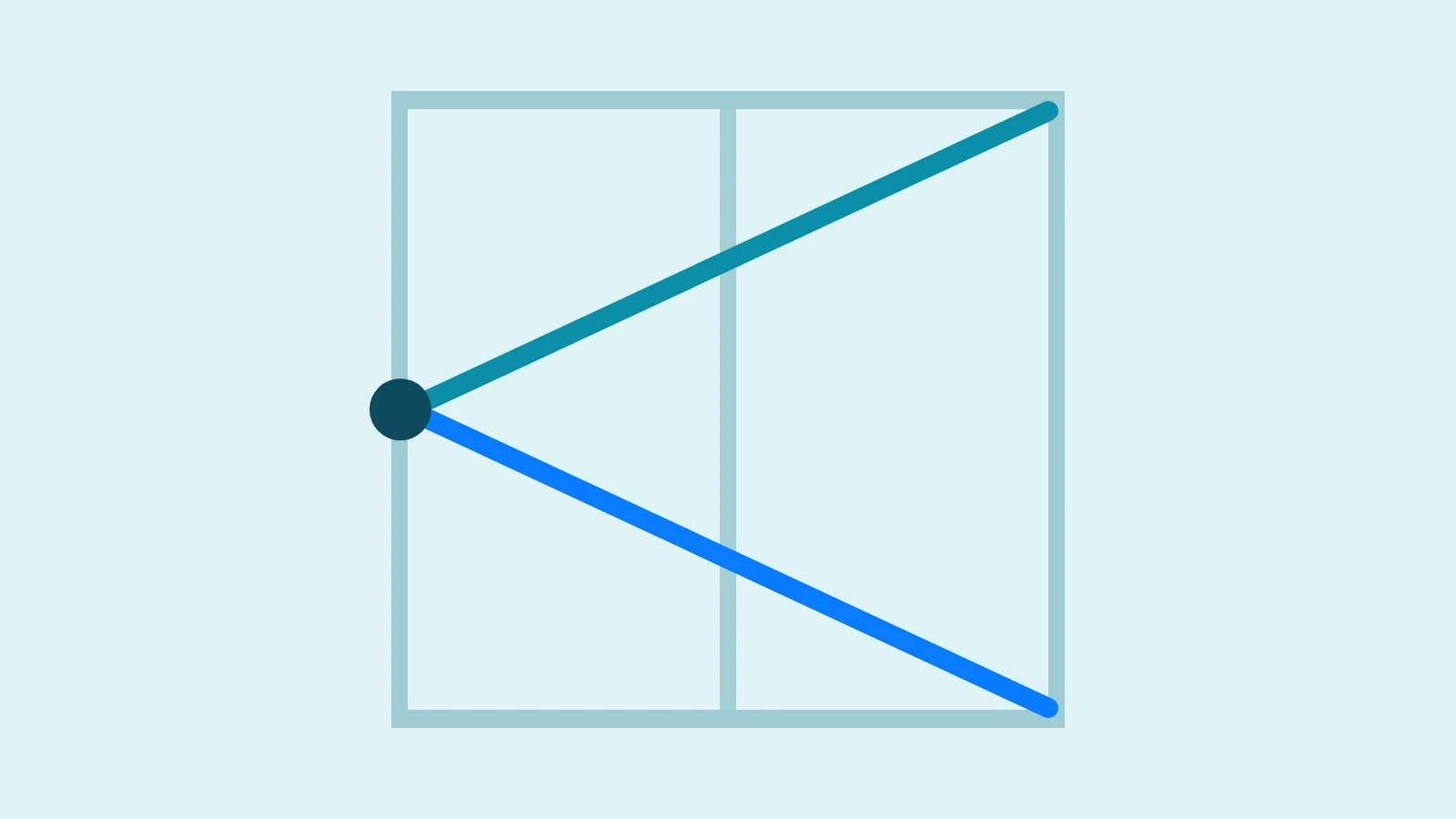
K-bracing is a layout of C-profile diagonals placed between studs and noggins in a light steel panel, shaped like the letter K. Unlike a strap, it is expected to carry both tension and compression. So section buckling, the force balance at the node and how the profile ends bear are central to the design.
Key points
- K-bracing carries tension and compression; it does not go slack like a strap, but it can buckle.
- For a profile in compression, TBDY 2018 10.4.2.1(b) points to the axial compressive strength calculation.
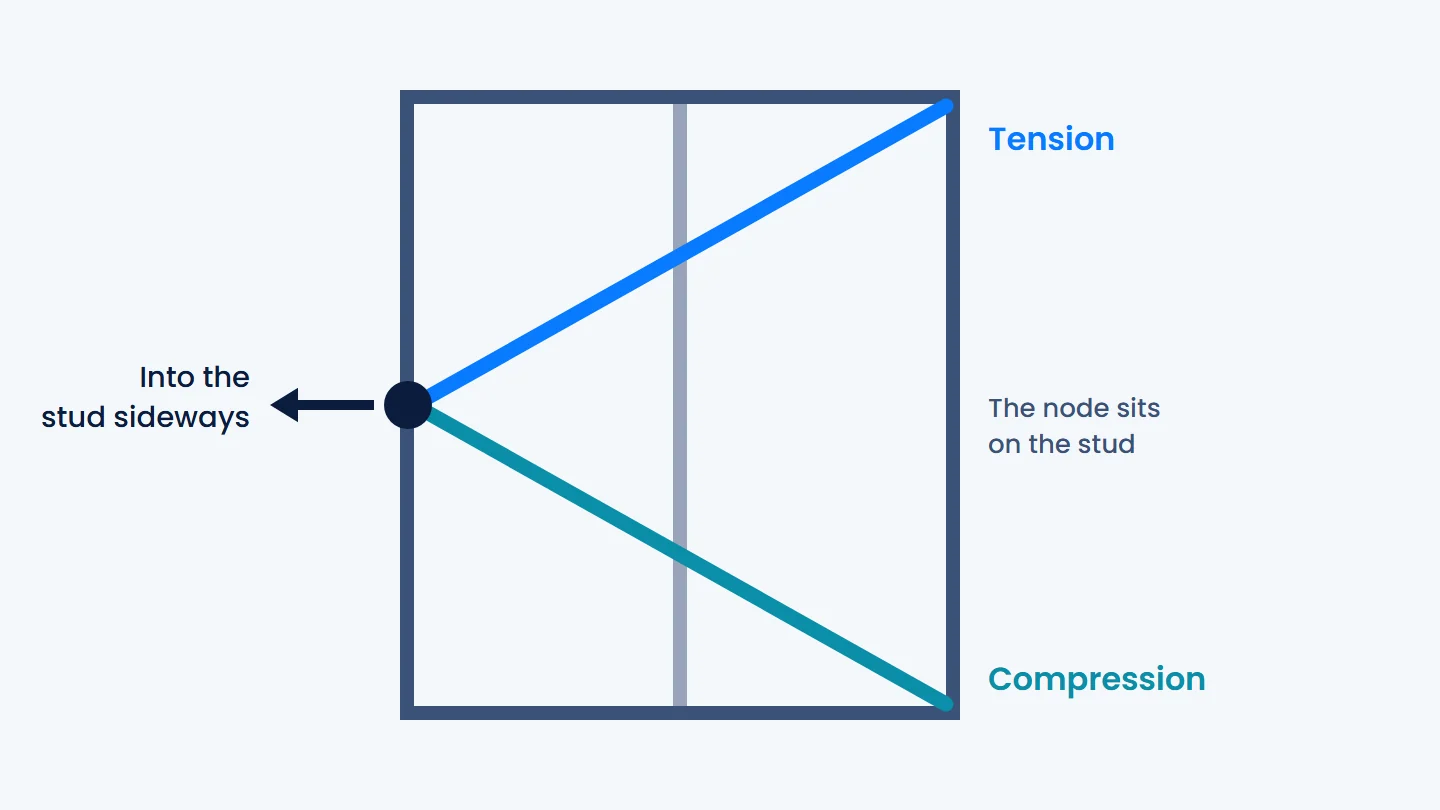
- The node where the two diagonals meet can load the stud sideways.
- A notch that weakens the section at the end, or a profile that does not seat properly, spoils the connection and the force transfer.
- In the sample house, corner bracing added 6.5% to wall steel with K and 9% with Zigzag.
In this article
Introduction
K-bracing is a layout in which two inclined profiles meet at a point inside a panel bay. The inclined members are usually made from the same C section as the studs and stay within the wall thickness. So they do not affect the sheathing, but they change the flow of force inside the panel from the start.
What is the difference between K-bracing and X-strap bracing?
| Topic | X-strap bracing | K profile bracing |
|---|---|---|
| Element | Flat steel strap | C profile |
| Position | On the panel face | Within the wall thickness |
| Force | Tension only | Tension and compression |
| Typical risk | Slack, net section, eccentricity | Buckling, node, end bearing |
| Effect on sheathing | The strap adds thickness on the surface | The surface stays flat |
| Production | Cut strap and connection parts | Cut and processed like a profile |
Why does profile bracing need a separate check in compression?
In tension, the section area and the connection govern. In compression the job changes: a thin-walled open C section can lose capacity through global buckling, local buckling and distortion of the section. As the unbraced length grows, strength drops. TBDY 2018 10.4.2.1(b) makes this distinction explicit: if the axial force is tension, the strength is calculated on the gross section; if it is compression, with the axial compressive strength equations given for studs.
So a member being a C shape does not show that it has enough compression capacity at every length and in every direction. Thickness, unbraced length, the points where it is connected and the direction of the section are evaluated together.
What happens at the node?
In a K layout the two diagonals come to the same point. While one carries tension and the other compression, the horizontal components of the two forces can balance each other. If the member in compression loses its capacity, the balance is broken and the force of the member in tension loads the stud sideways. The stud is bent at mid-height.
This is why general structural steel rules treat the K layout with caution. These rules cannot be carried over directly to cold-formed panels, because their scope differs. But understanding the mechanism helps: the calculation of a K panel has to cover not only the brace itself but also the stud and noggin the node sits on.
How should the profile end bear?
Where the brace end bears on the stud or track, the force passes through the screws. Notching the end too much during the inclined cut, or cutting the flanges or lips too far, weakens the section exactly where the force is most concentrated. The end connection is produced according to the designed detail, not "as much as fits" on site.
- The actual section of the brace and its direction inside the wall must be clear.
- The open face of the neighbouring stud must not block screw access.
- The brace end should bear with the full section; any loss of section must enter the calculation.
- In a mirrored panel the profile direction must be mirrored too.
- The joint direction with the intermediate member must be visible in the drawing.
Does the regulation allow K-bracing?
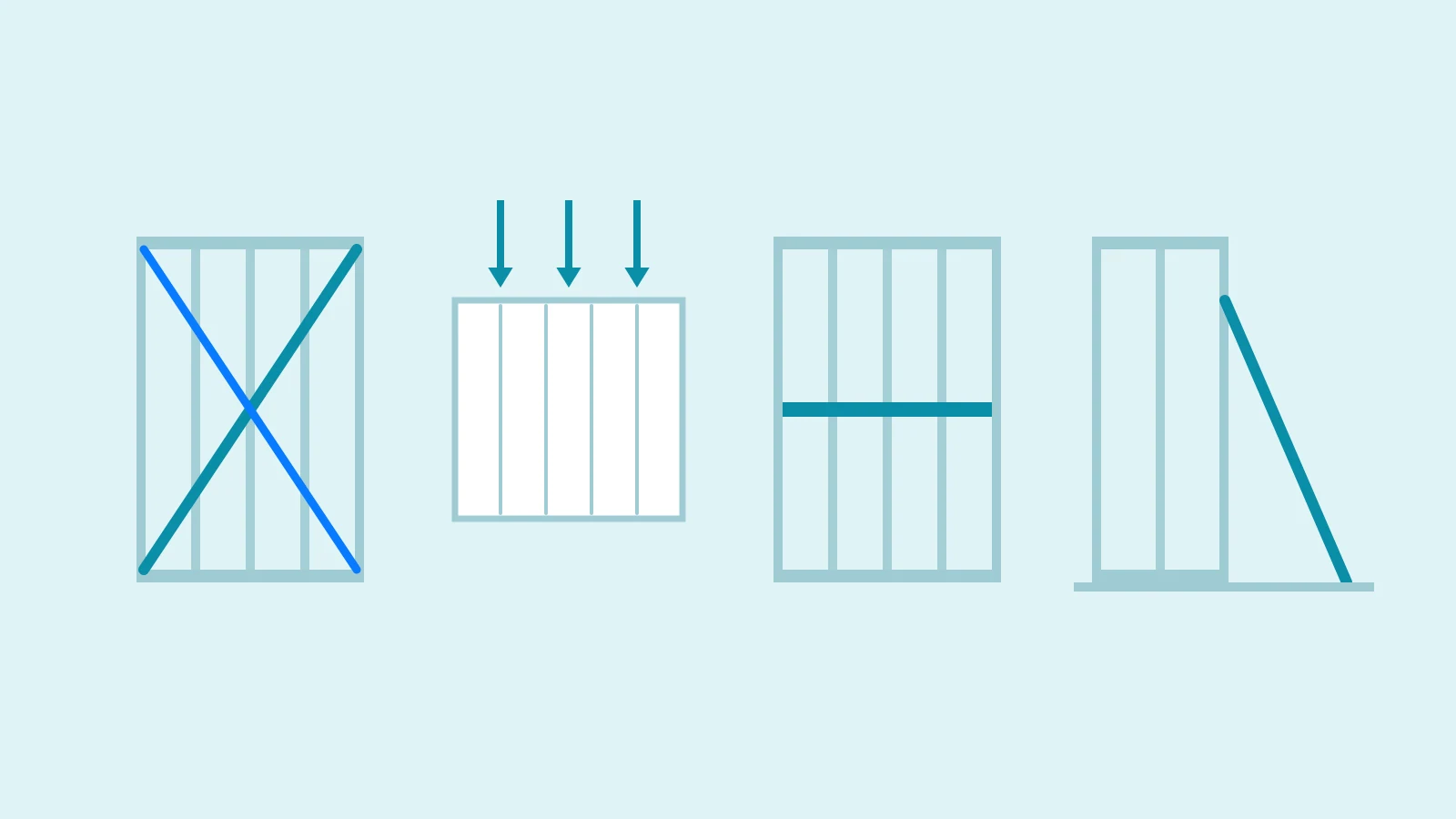
Among the braced panel examples in TBDY 2018 Figure 10.2 there is a K-like layout divided by a horizontal bridging member and a V-shaped layout. So the shape is defined for light steel. Still, the figure is not a capacity table.
Section 6 of the 2027 regulation, on the other hand, says that braces shall be placed as one continuous member between the top and bottom track of the panel. For diagonals that are divided by bridging or cut at the node, how this sentence is met should be settled with the project engineer for projects started after 1 January 2027.
Read nextTurkey's light steel regulation takes effect on 1 January 2027: what changes?How is K-bracing built in QSteelCAD?
- The bay you click is filled full height from bottom track to top track; the noggins in that bay are removed.
- The apex of the K points toward the panel end that the bay is closer to.
- At the level of the K apex there is a double collar: the lower one faces down, the upper one faces up.
- A second click in the same bay mirrors the K.
- In bays that cannot be full height, such as under a window, the earlier behaviour continues.
When K was chosen as the corner bracing, wall steel went up by 6.5% with K and by 9% with Zigzag on the sample house "Deneme - Çelik Ev.dxf". The percentages apply to this house only; follow the increase in your own project from the steel report.
Frequently asked
Is K-bracing or X strap better?
Neither is better in general. K-bracing leaves the surface flat and carries compression, but needs buckling and node checks. X strap is light, but needs tensioning, eccentricity and end connection checks. The decision is made with the load and detail of the project.
Why does the stud matter in K-bracing?
If the node sits on a stud, the stud carries the sideways force together with the vertical force. Its calculation is not the same as that of a stud without a node.
Do noggins remain in a K-braced bay?
That depends on the layout used. In QSteelCAD the K command removes the noggins in a full-height bay.
This article is general information. It does not replace project calculations, an engineer's approval or the official text. Articles and values were read from the texts in force on the article's date.