
Short answer
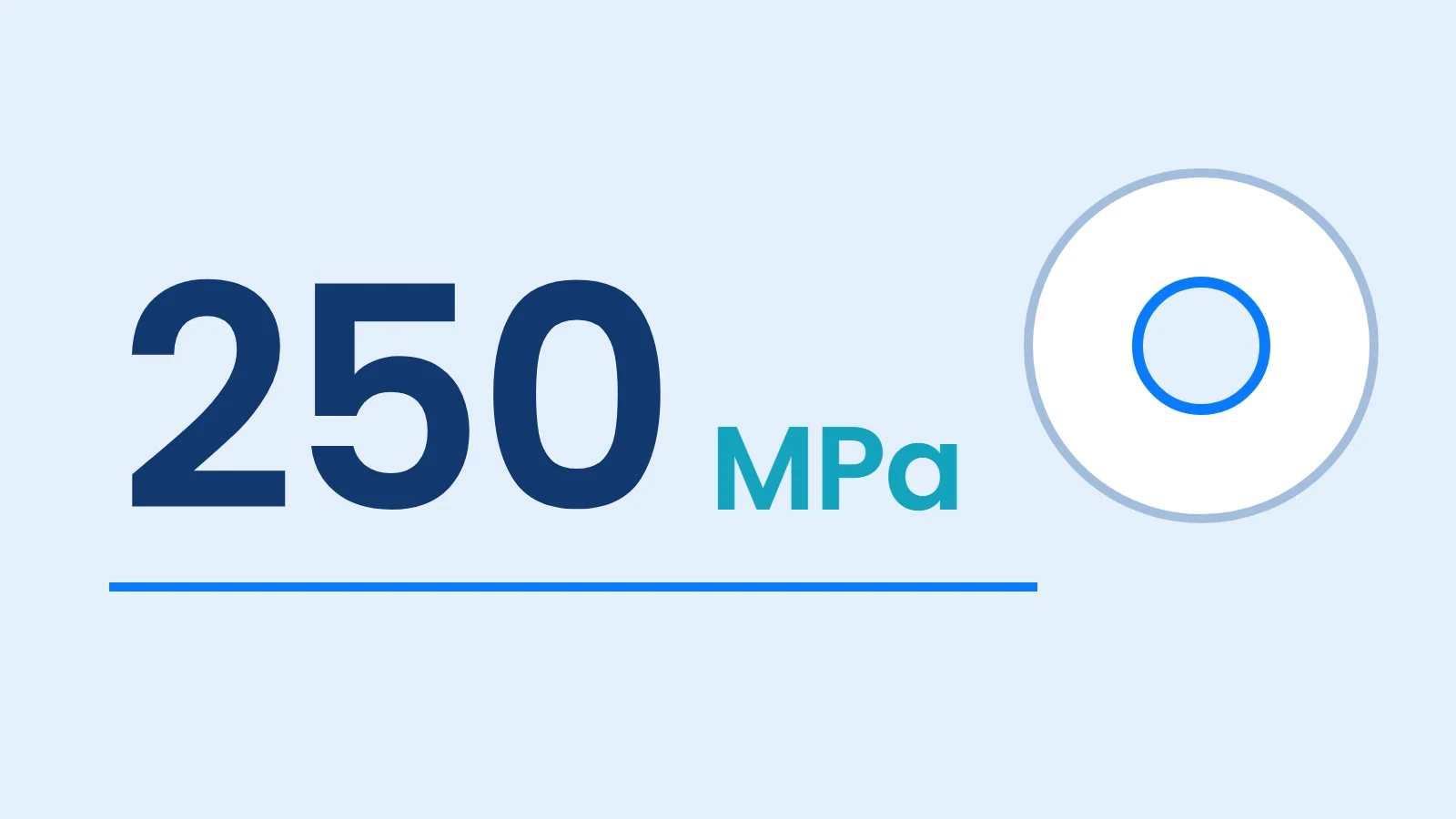
Under the 2027 light steel regulation, cold-formed members need a minimum yield stress of 250 MPa and a tensile-to-yield ratio of at least 1.08. Sheet thickness is 0.45 to 4 mm, and DX51D to DX57D type steels are not used in load-bearing studs. Purlins, façade girts and non-load-bearing studs may use 220 MPa yield.
Key points
- Minimum yield stress is 250 MPa; it was 235 MPa in the Turkish Building Earthquake Code 2018 (TBDY 2018).
- DX51D to DX57D type steels are not used in load-bearing studs.
- Sheet thickness is between 0.45 and 4 mm.
- Elongation at fracture of 10% counts as normal ductility, 16% as high ductility.
- Material requirements are checked by testing and the results are added to the design report.
In this article
Introduction
In light steel, design calculation starts from the sheet grade. If the coil is wrong, every calculation built on it is wrong. Section 2 of the new regulation defines the material and Section 3 the cross-section; together they form the draft of your purchasing list.
Which sheet can be used?
Cold-formed steel members are made from flat steel products conforming to TS EN 10346. The sheet thickness is between 0.45 mm and 4 mm, and the members are produced by bending in forming machines. TBDY 2018 gave this range as 0.45 to 16 mm; the new text defines light steel more narrowly. Where hot-rolled steel is needed, material specified in accordance with TS EN 10025 is used.
Which mechanical properties are required?
| Property | Limit | Clause |
|---|---|---|
| Minimum yield stress | 250 MPa | Section 2 (a) |
| Tensile / yield ratio | At least 1.08 | Section 2 (b) |
| Elongation at fracture, normal ductility | At least 10% | Section 2 (c) |
| Elongation at fracture, high ductility | At least 16% | Section 2 (c) |
| Where normal-ductility material is used | Purlins, façade girts, non-load-bearing studs | Section 2 (d) |
| Minimum yield for these members | May be 220 MPa | Section 2 (d) |
Item (e) of the regulation is important: it is checked by testing that all of these requirements are met, and the test results are added to the design report. So the certificate file is not a separate document from the project; it is part of the report.
Why can DX51D not be used in load-bearing studs?
The text says it plainly: in light steel building production, steels of the DX51D, DX52D, DX53D, DX54D, DX55D, DX56D and DX57D types shall not be used in load-bearing studs. This family consists of forming steels; they are not chosen to guarantee a lower bound on yield stress for structural calculation. Structural grades carry the yield value in their name (such as S250GD).
The regulation does not recommend a grade name; it sets the limit through yield stress, ratio and elongation. Which grade to use is determined by the project. If two coils of the same thickness are in the warehouse, the person at the head of the line needs to see this difference.
What are the requirements for screws?
Self-drilling screws or bolts are used in connections. In tests carried out to ASTM C1513 or equivalent standards, the screws meet the values in Table 2.1:
| International no. | Diameter (mm) | Minimum torque (Nm) | Surface hardness | Core hardness |
|---|---|---|---|---|
| 6 | 3.5 | 2.7 | C 50 | C 32 |
| 8 | 4.2 | 4.7 | C 50 | C 32 |
| 10 | 4.8 | 6.9 | C 50 | C 32 |
| 12 | 5.5 | 10.4 | C 50 | C 32 |
| ¼" | 6.3 | 16.9 | C 50 | C 32 |
Item (i) of Section 2 requires the characteristic tensile and shear strengths given by the screw manufacturer to be verified by testing and documented. Item 1.4 of Table 10.1 also puts these requirements on the checklist.
What limits apply to the cross-section?
Section 3 gives, in Table 3.1, the limits on the ratios of flange width/thickness, web height/thickness and edge stiffener length/thickness. It also adds two conditions for the effective contribution of edge stiffeners:
- 0.20 ≤ c/b ≤ 0.60 and 0.10 ≤ d/b ≤ 0.30.
- If c/b < 0.20 or d/b < 0.10, the contribution of the edge stiffener is ignored.
- If c/b > 0.60 or d/b > 0.30, the effective section is calculated according to Sections 4.9 and 4.10 and verified by testing according to Section 1.3.
- In C and Σ profiles the flange width is at least 30 mm, so that the sheathing can be screwed on.
- In U profiles the flange width is at least 20 mm.
What to look at when buying coil
- Is the steel type from the DX family or a structural grade?
- Is the yield stress on the mill test certificate 250 MPa or higher?
- Is the tensile/yield ratio 1.08 or higher?
- Is the elongation at fracture 16% or higher; if not, is the place of use limited?
- Is the wall thickness written as the base metal thickness?
- Is the coating amount suitable for the corrosion class of the site?
- Have the certificates been added to the project file?
Where are these values in QSteelCAD?
Section, wall thickness and lip dimension come from the section setting defined by the user in the program. The program carries these values into the model and the production file, but it does not check the quality of the sheet or approve material suitability. You need to review your section library against the new limits.
Frequently asked
What is the minimum yield stress in light steel?
250 MPa under the 2027 regulation. Purlins, façade girts and non-load-bearing studs may use 220 MPa. In the TBDY 2018 text the value is 235 MPa.
Can DX51D be used in light steel?
Not in load-bearing studs. The regulation expressly excludes the types from DX51D to DX57D for load-bearing studs.
How thin can the sheet be in light steel?
The range in the text is 0.45 to 4 mm, but load-bearing studs additionally require at least 0.9 mm.
What is high-ductility material?
Material with an elongation at fracture of at least 16%. Between 10% and 16% it counts as normal ductility and its place of use is limited.
This article is general information. It does not replace project calculations, an engineer's approval or the official text. Articles and values were read from the texts in force on the article's date.